
Foot Surgery
- Bunions (hallux valgus), hallux rigidus, claw toes, hammer toes and other claw-type toe deformities
- Overpronation, flat feet, splayfoot, high arches, clubfoot and metatarsus adductus
- Foot deformities associated with gout, rheumatic conditions or diabetes
- Osteoarthritis and cartilage damage in the ankle and tarsal joints
- Achilles tendon problems, heel spurs, Haglund's deformity and ligament instability
- Nerve compression conditions such as Morton's neuroma and tarsal tunnel syndrome
- Charcot foot and fractures
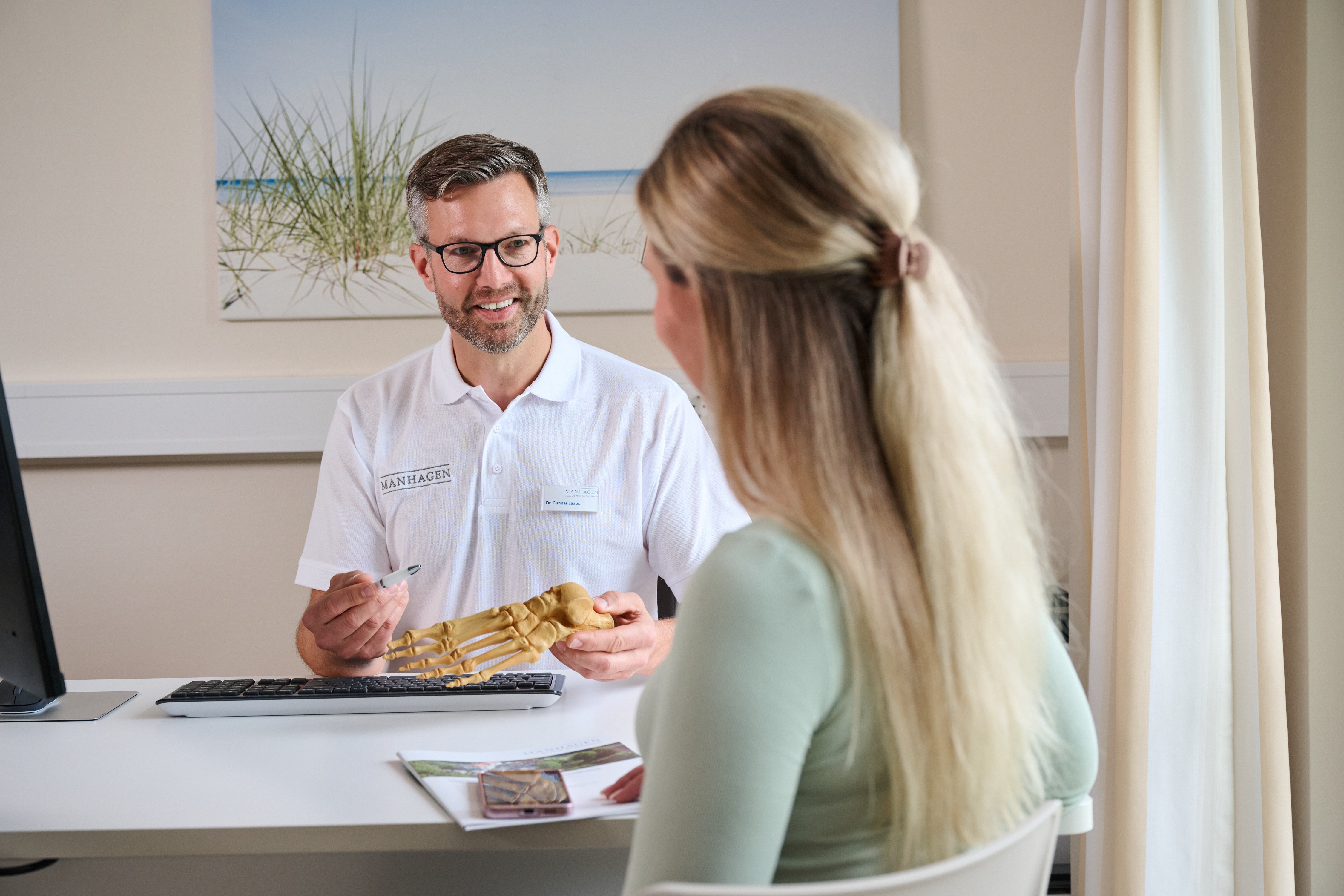
Non-Surgical Treatment
Orthotics
Orthotic aids can take strain off joints, support movement and help during recovery.
Shockwave Therapy for Tendon Problems
Shockwave therapy may be used for chronic pain in tendons and where they attach to bone, for example at the heel, Achilles tendon, shoulder or elbow.
Understanding Foot Problems
Achilles Tendon Problems
Achilles tendon pain can have different causes. With long-standing symptoms, the tendon may thicken or show signs of wear. Exercises and physiotherapy are among the non-surgical options. Further treatment depends on the findings.
Heel Pain and Plantar Fasciitis
Overuse, changes in foot alignment or tight calf muscles can contribute to pain on the sole of the foot. A heel spur visible on an X-ray does not explain the pain on its own: pain can occur without a spur. Treatment is usually non-surgical, for example with fitted insoles and exercises, and can take several months.
Posterior Heel Spur and Haglund's Deformity
A bone spur where the Achilles tendon attaches or a bony prominence on the heel can irritate the tendon and nearby bursa. Pain may occur when walking, bearing weight or wearing shoes that press on the area. We consider surgery based on the findings and how treatment has worked so far.
Hallux Valgus: Bunions
A bunion can cause pain on the inside of the big toe and under the sole if it changes the way weight is distributed. It can also push neighbouring toes out of position. Suitable footwear may help. If problems persist, we assess whether correction is appropriate and which procedure would suit you.
Hallux Rigidus: Osteoarthritis of the Big Toe
Wear in the joint at the base of the big toe can cause pain and stiffness. Limping to protect the joint can place more strain on other parts of the foot. Treatment depends on your symptoms and the condition of the joint. Options include suitable footwear and, where appropriate, surgery.
Hammer Toes and Claw Toes
Toe deformities can cause painful calluses and make shoes uncomfortable. At first, the toes often still move, but later the joints can stiffen in the bent position. Other changes in foot alignment and how well the toes move help guide treatment.
Overpronation and Flat Feet
In adults, acquired overpronation or a fallen arch can cause various symptoms and other toe deformities. Treatment depends on severity, mobility and any changes from wear. Children with painless overpronation or flat feet often do not need treatment, but ongoing limitations should be assessed individually.
Repeated Ankle Sprains and Ligament Instability
After you roll your ankle, we need to distinguish between a sprain, a ligament injury and a fracture. This requires an examination and sometimes imaging. Repeated episodes can point to chronic ligament instability. We weigh up stability exercises and, where appropriate, surgery based on the findings.
Forefoot Pain and Morton's Neuroma
Calluses under the forefoot may indicate uneven loading. Morton's neuroma is a painful change affecting a nerve. Identifying the exact cause helps us choose ways to reduce pressure and consider further treatment where needed.
Foot Fractures
Bone alignment and stability are important when assessing fractures. Some fractures that have not shifted can heal with immobilisation, while bones that are out of alignment may need surgery to stabilise them. How much weight you can put on the foot depends on the findings.
Weight-Bearing and Sport After Treatment
When you can wear normal shoes, walk longer distances or return to sport depends on your condition, treatment and recovery. After surgery, you may temporarily need a special shoe, brace or crutches. Follow the instructions for your own recovery rather than a general schedule.
Contact Us Directly
Specialists in Orthopaedics and Trauma Surgery
Schäferkampsallee 18
20357 Hamburg
Tuesday: 08:00 to 12:00 and 14:00 to 17:00
Wednesday: 08:00 to 12:00
Friday: 08:00 to 13:00
and by appointment
- Phone
- 040 44 06 06
- Fax
- 040 45 47 04
- Walk-In Clinic
- Mondays and Thursdays from 08:00 to 10:30 for urgent cases. Spaces are limited.
- Address
- Schäferkampsallee 18, 20357 Hamburg